

When people think of the Cold War, images of Washington, Moscow, or Berlin spring to mind—cities that stood on the frontlines of global confrontation from 1947 to 1991. However, few realise that Manchester, formerly renowned worldwide as the “First Industrial City,” played a pivotal role in the technological race between East and West. During post-war reconstruction and industrial development, Manchester became a hub of innovation, secret technologies, and scientific advancement that shaped the modern world of defence. Read more on manchesteryes.com.
Manchester’s Transformation: From the “First Industrial City” to a Centre for Secret Advanced Technology
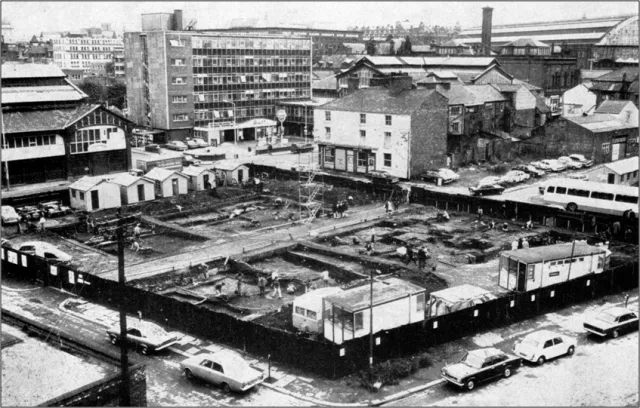
By the end of the Second World War, Manchester was a city rebuilding not only its bomb-damaged streets but also its identity. Factories that once spun textiles were repurposed for a new kind of production—one defined by electronics, engineering, and nuclear research. Britain’s post-war focus shifted from the battlefield to a covert technological edge, and Manchester was perfectly positioned to contribute.
In 1948, as the Iron Curtain descended across Europe, the British government began investing heavily in northern industrial centres to decentralise defence research. Manchester’s universities, particularly the University of Manchester and the Manchester Institute of Science and Technology (UMIST), became hubs for secret projects. Engineers who had once worked on civil aircraft were now engaged in developing radar systems, propulsion units, and even components for nuclear weaponry.
Behind the doors of mills where cotton was once manufactured, work was conducted under strict confidentiality. Many locals remained oblivious to the fact that within the city limits, some of Britain’s most advanced Cold War experiments were unfolding—projects that would subsequently define the defence and communication networks of not only the city but the entire country for decades to come.
Atoms, Codes, and Computers
If there was one area where Manchester left an indelible mark, it was computing. In 1948, the world’s first stored-programme computer, the “Manchester Baby,” was born at the University of Manchester. Initially a purely academic project, it eventually attracted military attention. The Manchester Baby’s ability to calculate trajectories, simulate explosions, or decode encrypted Soviet messages was nothing short of revolutionary.
Computer laboratories soon became intrinsically linked with the defence sector. In the early 1950s, Manchester scientists collaborated with government research agencies to develop computing systems for military simulation and early-warning radar analysis. While the Americans had IBM and the Soviets their vast research institutes, Manchester’s modest facilities and improvised equipment led to breakthroughs that pushed the boundaries of cybernetics and electronic warfare.
Simultaneously, the nearby facility at Aldermaston—the heart of British atomic weapons research—leaned on Manchester’s expertise in materials science and nuclear physics. Several professors from the city’s universities worked as consultants on atomic projects, often under Non-Disclosure Agreements so strict that their families never knew the nature of their work. The race for deterrence was no longer fought with soldiers; it was fought with data, atoms, and intellect.
Aviation and Espionage
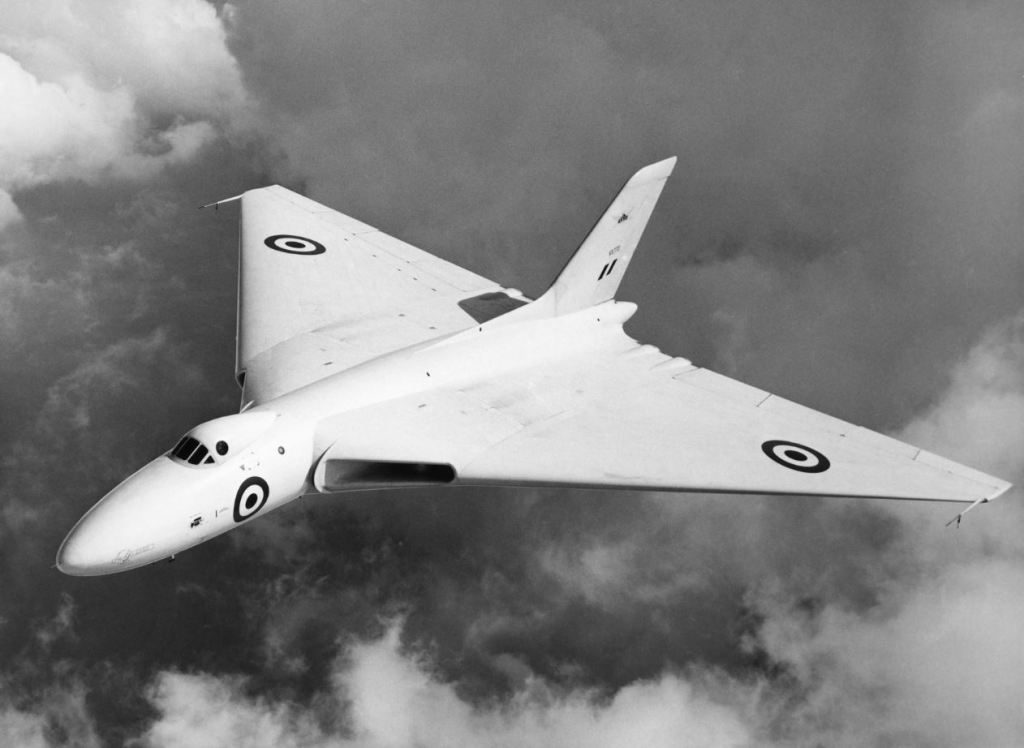
While nuclear and computing research progressed on the ground, the skies above Manchester told a different story. Companies like “Avro,” based in neighbouring Chadderton and Woodford, became symbols of British aerospace prowess. Throughout the 1950s, Avro developed the “Vulcan” bomber—a delta-winged aircraft capable of carrying nuclear payloads deep into Soviet territory. The Vulcan was not just an aircraft; it was a statement. Designed and tested in the Manchester area, it represented the new face of deterrence against USSR aggression.
But where there is aviation, there is espionage. Manchester’s proximity to major airbases and defence contractors made it a target for Soviet intelligence. MI5 records declassified decades later reveal that suspected spies and informants were monitored in the region. Technical drawings, university research data, and communication networks were potential goldmines for foreign agents. As the ideological struggle intensified, Manchester’s scientific brilliance also became a matter of national security.
Cold War Secrets Beneath the City
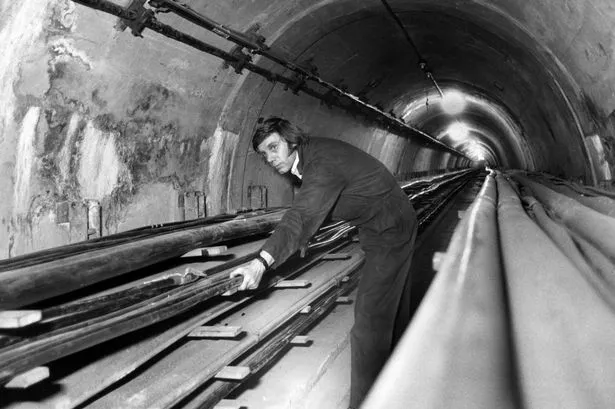
Beyond the science and industry, Manchester harboured another significant secret during the Cold War—a network of tunnels and bunkers built at the height of the standoff. This was not a factory or a plant, but a sort of “vital system” for the city: beneath the ground, amidst concrete and steel, a system of communication and defence was born, designed to withstand a nuclear threat.
After the Second World War, the Western world faced a new unease—the Cold War. Nuclear strategy, radioactive fallout, and bombardments all became a reality. Consequently, Britain decided that communication must remain alive even after the worst-case scenario. This is why, in the 1950s, the secret construction of the “Guardian Underground Telephone Exchange” began in Manchester—a complex of tunnels over 100 feet deep intended to survive strikes and ensure connectivity.
The network consisted of tunnels roughly 2 metres in diameter, connected to cable “garlands” that ran beneath the city from Ardwick to Deansgate, under the River Irwell, and onwards to Salford. These tunnels housed telephone equipment, generators, sleeping quarters, a kitchen, and even a bar—everything needed for technical staff to live and work for weeks without surfacing.
For Manchester, this facility symbolized a dual nature: on one hand, an industrial centre; on the other, a strategic rear guard. The city, which had produced goods since the Industrial Revolution, was now excavating beneath the earth to seek out and protect communication infrastructure.
Although the “Guardian Underground Telephone Exchange” was never utilised in a full-scale “nuclear” scenario, it remains operational. In the 21st century, it is partially used as a conduit for fibre-optic cables. The city’s subterranean past is becoming part of its modern informational identity. Furthermore, it sparks interest as a site for urban exploration and as a historical artefact. It serves as a reminder that the Cold War was not just on frontlines or in politics—it was right beneath our feet.
Secret tunnels, scientific developments, and Manchester’s strategic aviation—this is the story of the city during the Cold War. It is all a reminder that major historical processes have specific locations, specific infrastructure, and specific people. And that Manchester in the 21st century is not merely a city of culture, sport, or innovation—it still bears the traces of the Cold War, hidden where one might least expect them.
By the time the Berlin Wall fell in 1989, Manchester’s Cold War legacy was already woven into the DNA of British technology. Research conducted in its universities laid the groundwork for modern computing, cybersecurity, and telecommunications. Engineering expertise, honed in local industries, evolved into the technologies underpinning the drones, radars, and digital defence systems used in the 2020s.
What began as covert military work transformed Manchester into one of the UK’s most dynamic centres for innovation. The very laboratories that once coded military simulations are now pioneering research in artificial intelligence, quantum computing, and data encryption—technologies that continue to define global power dynamics.
The Cold War may have ended, but the city’s connection to defence innovation has never truly ceased. Manchester continues to supply the world not with cotton or coal, but with intellect—both human and artificial. The echoes of its secret projects still resonate in every algorithm, sensor, and defence system born on its scientific soil.
- https://ilovemanchester.com/the-secret-cold-war-history-of-manchesters-underground-tunnel-network
- https://www.manchestereveningnews.co.uk/news/nostalgia/secret-nuclear-war-tunnel-under-23736758
- https://www.iwm.org.uk/history/the-history-of-the-avro-vulcan-bomber
- https://www.manchester.ac.uk/about/news/how-a-70-year-old-baby-changed-the-face-of-modern-computing/