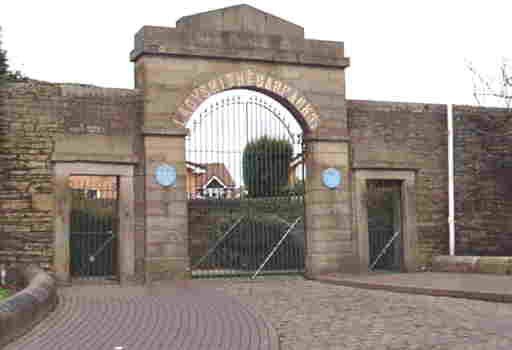
Few people know that behind the industrial face of Manchester lies a rich military past—a past of pageantry. In the 21st century, few places reflect this heritage as vividly as Ladysmith Barracks in Ashton-under-Lyne. Once, this was a source of true pride for an entire generation of soldiers. Ladysmith Barracks was simultaneously a symbol of British imperial might and a pillar of the local community. Although little remains of their original appearance in the 2020s, the stories born within these walls do not die. They tell of men who went to wars far from home, and of a town forever marked by its military history. Read more on manchesteryes.com.
The Birth of a Garrison Town
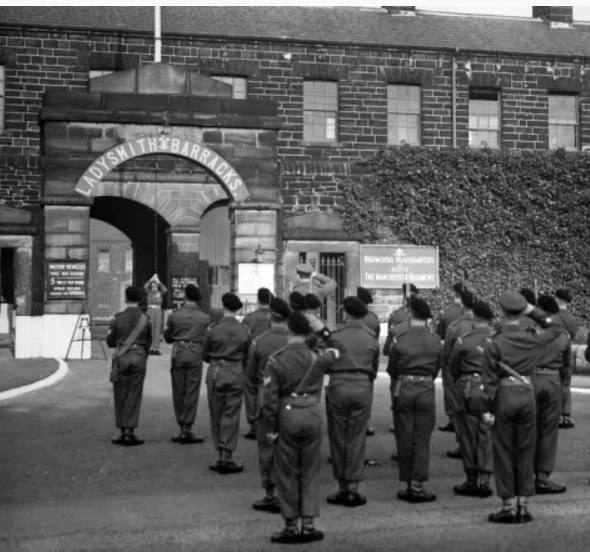
In the mid-19th century, Britain was expanding rapidly—not only industrially but also militarily. The Empire stretched across continents, and with it grew the need for well-trained soldiers. Ashton-under-Lyne, a thriving cotton town east of Manchester, was chosen as the site for a new regimental depot. Construction began in 1843 on what would eventually become Ladysmith Barracks—later named in honour of the famous siege of 1899 during the Second Boer War.
Built from red brick and designed in the style of a Victorian-era fortress, the barracks stood proudly on Mossley Road. Initially, they were home to the 63rd Regiment of Foot, and later the 96th Regiment of Foot, which were amalgamated into the Manchester Regiment in 1881 as part of the Cardwell Reforms. These reforms modernised the British Army by linking regiments to specific geographical areas, and thus, the soldiers of Manchester finally had a home of their own.
From that moment on, the barracks became much more than just a military base. They were a symbol of civic pride and a training ground for young men.
The Architecture of Ladysmith Barracks
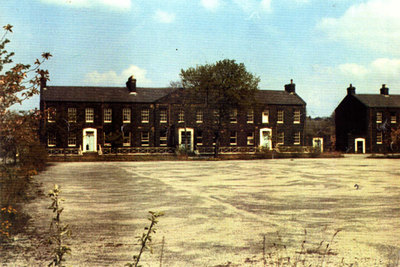
Ladysmith Barracks in Ashton-under-Lyne is one of the most famous military structures in the history of Greater Manchester. It represented not only a vital military facility but also a significant architectural heritage.
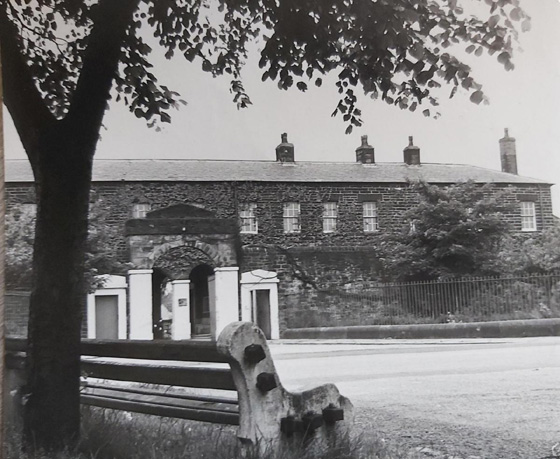
Architecturally, the barracks reflect the mid-Victorian fortress style typical of 19th-century British military architecture. The building is constructed from dark local sandstone with lighter stone trim around the arch, giving it a robust and defensive appearance. The central arched gateway served as the dominant feature, flanked by two guardhouses with small windows—simple, symmetrical, and functional. Above the arch sits a carved stone panel bearing the proud inscription “Ladysmith Barracks”. Beyond the gate lay an entire military complex. Upon entering the gateway, the view opened onto a large parade ground surrounded by barracks, stables, and training areas arranged in a square plan—a design intended for efficiency and order.
Ladysmith Barracks makes a captivating overall impression. Even in the 2020s, the preserved gateway—a Grade II listed building—serves as a reminder of the town’s military heritage and the architectural simplicity that defined Victorian military engineering.
The Manchester Regiment and Ladysmith Barracks
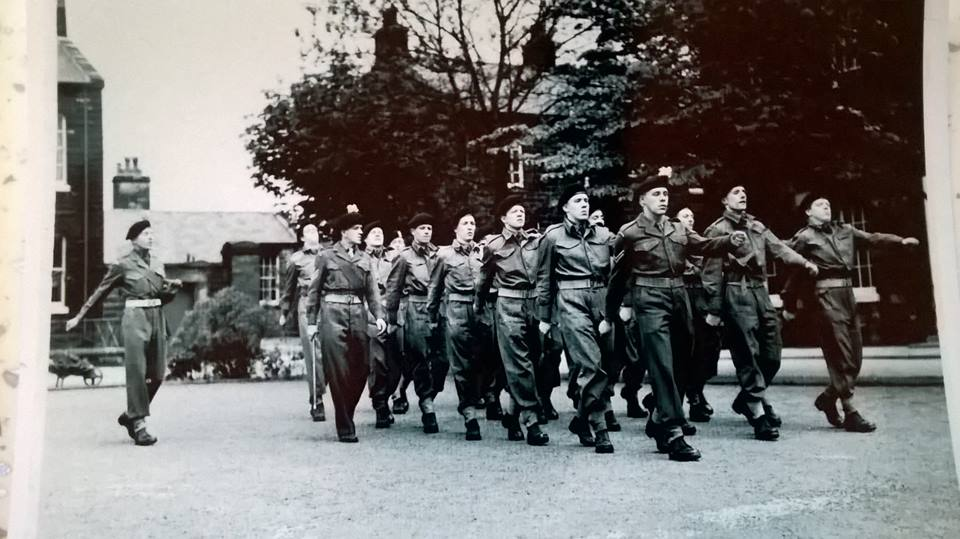
The creation of the Manchester Regiment marked a new era for the barracks. The soldiers who trained here went on to fight in some of the British Army’s most critical campaigns. From colonial conflicts in Africa and Asia to the brutal trenches of the Western Front.
During the Boer War of 1899–1902, the regiment distinguished itself in the Siege of Ladysmith—an event so defining that the barracks themselves were renamed in its honour. The name became synonymous with the resilience, endurance, and tenacity of ordinary soldiers.
When the First World War broke out in 1914, the barracks transformed into a military hub. Thousands of volunteers travelled there to enlist in the army. It was here that the Manchester Pals battalions were formed, comprising local men who banded together and trained here before departing for the Somme and Gallipoli.
Even during the Second World War, Ladysmith Barracks remained vital, serving as a training and logistics centre. Their walls witnessed countless military events.
Life in the Barracks
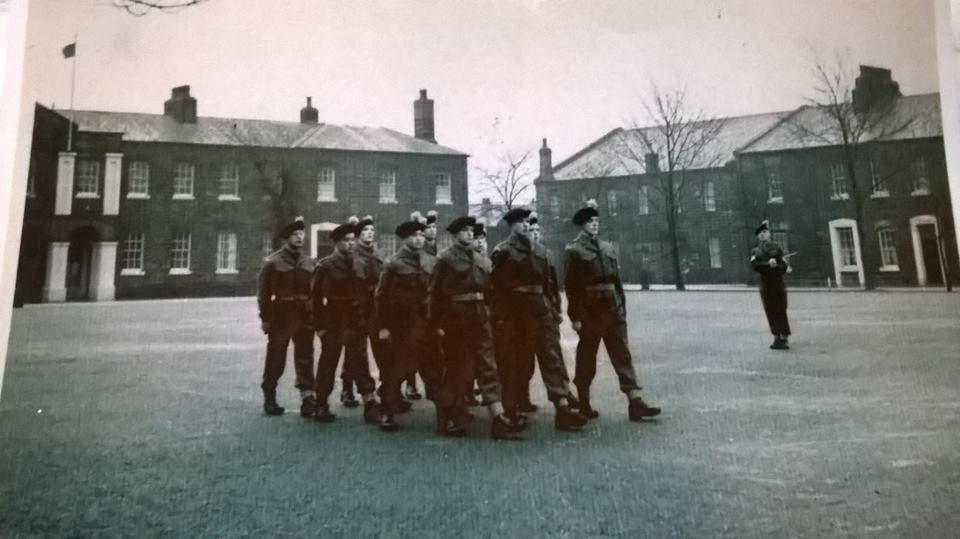
Although much of Manchester’s wartime history is told through factories and their repurposing, life at Ladysmith Barracks revealed a different side of the city. For the residents of Ashton-under-Lyne, the barracks were not merely a military base—they were part of the community.
Soldiers trained rigorously on the parade ground, practised shooting, and lived in austere but well-maintained quarters. Local women worked in the laundries and kitchens, while children often gathered near the gates to watch drills or listen to the regimental band play. The parades conducted by the military through the streets became town-wide events.
In the interwar years, the barracks hosted dances, charity events, and memorial services. The line between military and civilian life became blurred. For many families in those times, having a son stationed at the barracks was a badge of pride.
However, not everything was ideal. The barracks were a military facility, meaning strict military discipline prevailed, and working conditions were arduous. Even more oppressive for the soldiers were the emotional and psychological consequences of repeated wars.
The End of the Ladysmith Barracks Era
The end of the Ladysmith Barracks era was not simply the conclusion of the history of a single military base, but a symbol of the major changes that took place in post-war Britain.
By the mid-1950s, the country’s military strategy had transformed radically. After the Second World War, the state began to actively reduce army expenditure, and with the dissolution of the British Empire, the need to maintain numerous garrisons within the country itself disappeared. Manchester, once one of the key industrial and military centres, gradually lost its role in the national defence system.
Ladysmith Barracks, which had served as a home for thousands of soldiers for over a century, simply became redundant. In 1958, a historic decision was made—the Manchester Regiment was amalgamated with the King’s Regiment (Liverpool), creating a new structure: The King’s Regiment. This amalgamation marked the end of the independent existence of the Manchester Regiment, which had proudly borne its name since the 19th century.
Following this, the barracks gradually lost their purpose. Some of the premises were used for administrative needs, whilst others served as warehouses or training centres.
By the early 1980s, it became clear that maintaining the facility was unviable. Most of the buildings were demolished, clearing the way for residential development. Where military life once bustled, streets, parks, and playgrounds appeared. For local residents, this became a symbol of a new beginning—a transition from a military past to peaceful, civilian life.
The only witness to times gone by remained the main gateway—a majestic Victorian arch constructed of red brick and stone. It was through this very gate that thousands of soldiers once departed for the front, and through it, they returned home. In the 2020s, this gateway is a Grade II listed building and is considered one of the most valuable historical sites in all of Manchester.
For Manchester, this is not merely a memory of a military facility—it is part of the urban identity, proof that the city’s history is a history of people and their courage.