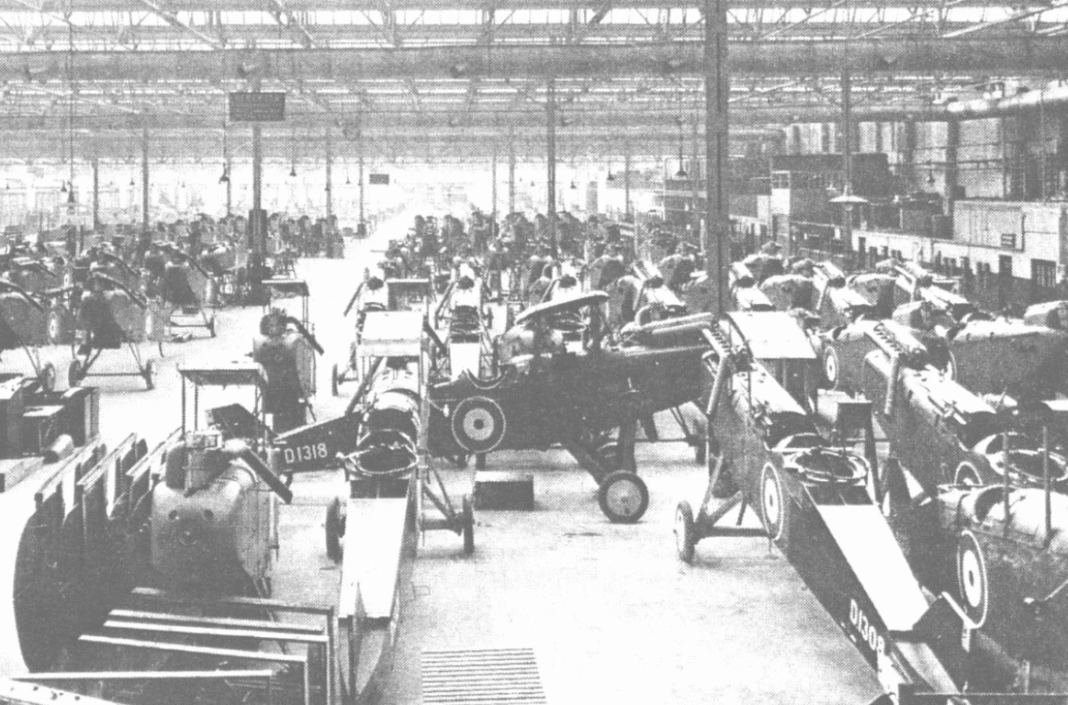

Walking through the streets of Heaton Chapel today, it is hard to imagine that this quiet Manchester suburb once lived a completely different life. Here, where the 21st century is dominated by peace and the rhythm of daily routine, a century ago machines roared, metal screeched, and the voices of workers filled the air. During the First World War, this was the site of a facility that wrote the area’s name into the history of British aviation – National Aircraft Factory No. 2. Read more at manchesteryes.com.
This was not just another wartime production facility. The factory became a symbol of Manchester’s industrial might, proof that the city could mobilise its resources and transform itself into a centre of British military power. On its assembly lines, military aircraft were born, taking to the skies to defend the country.
For thousands of workers in Heaton Chapel, the factory gave life new meaning. It provided jobs, changed the face of the district, and gave people a sense of contributing to a great cause. For Great Britain, the enterprise became part of the national defence system – a pillar of support during the difficult war years. It was here that people felt their daily labour was saving the lives of soldiers on the front, and every assembled aircraft brought the country closer to victory. The factory united the community, making it an integral part of the nation’s defensive shield.
Manchester During the First World War
It is worth noting that during the First World War, Great Britain, including the city of Manchester, was not a direct battleground. The fighting took place predominantly in France and Belgium on the Western Front, as well as in Eastern Europe, the Balkans, the Mediterranean, and the Middle East, where British troops were engaged.
Although there was no fighting on British soil, the country suffered significant losses and was heavily impacted by the war. German airships and aeroplanes carried out bombing raids on coastal towns and London. This was the first experience of mass air raids on civilians in British history. The war economy radically changed life in the cities. The production of armaments, military aircraft, ships, and munitions was concentrated in industrial centres, including Manchester.
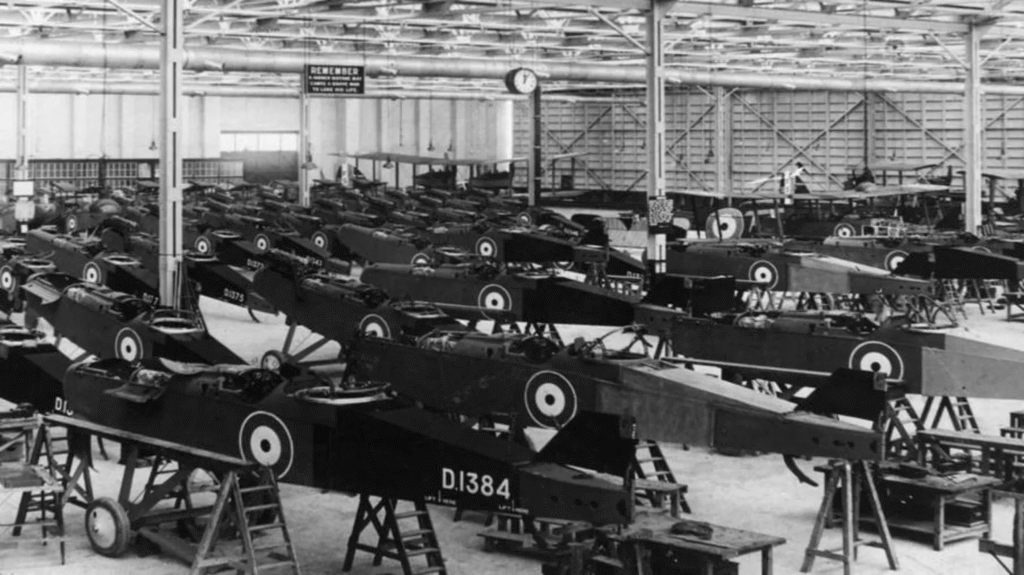
Mass production of weaponry and aircraft was also established in Manchester and the surrounding areas. For example, National Aircraft Factory No. 2 was set up in Heaton Chapel to build aircraft for the front line.
Thousands of Mancunians volunteered for the war. Entire units known as “Pals battalions” were formed in the city, made up of friends, neighbours, and colleagues. Many of them fought and died together on the Somme.
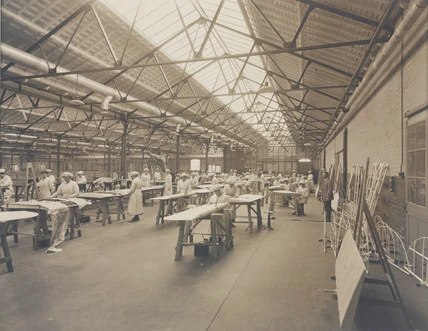
During the First World War, Manchester also faced labour shortages as men went to the front. This spurred the active recruitment of women into factories and plants, which became one of the key social shifts of the era.
Although there were no battles in Manchester or on British territory, the war profoundly changed the city: from its economy and industry to the role of women in society. Manchester was a vital home front centre, supplying the front with weapons, aircraft, and manpower, while its people paid a huge price in human losses.
The Construction of National Aircraft Factory No. 2
By 1917, the British government realised that the demand for aircraft far exceeded the capacity of the private sector. The solution was to build national aircraft factories managed by trusted industrial companies. One of these was established in Manchester with the backing of Crossley Motors, a firm known for manufacturing cars and aero engines. Located in Heaton Chapel on Crossley Road, the facility was converted from a partially built engine works into a major aircraft production centre, with construction completed by mid-1918.
The Factory’s Role During the First World War
At the height of the First World War, National Aircraft Factory No. 2 in Heaton Chapel, Manchester, received a major order from the Royal Air Force (RAF). The contract was for the production of 500 de Havilland DH.9 single-engine, two-seater biplane day bombers.
The first completed aircraft, with the serial number D1001, left the factory workshops in March 1918. Production was rapid: by the spring of 1919, after hostilities had ceased, 444 machines had been built.
Initially, the aircraft were sent for final assembly and testing to Coal Aston, near Sheffield, travelling by rail directly from the factory’s LNWR sidings. However, from May 1918, the process changed: new DH.9s were delivered in sections by either rail or road to Alexandra Park in Manchester, where they underwent final assembly and flight testing before being handed over to the RAF. Sometimes, testing also took place closer to home at the aerodrome in Cringle Fields.
After the Armistice, plans were drastically scaled back. The final 50 DH.9s on order were never built, and additional contracts were cancelled.
However, the factory had another ambitious project: the production of 200 de Havilland DH.10 Amiens twin-engine bombers. The first seven aircraft (serial numbers F351–F357) were completed and took to the air in February 1919. But by then the war was over, and the need for new machines had vanished. The remainder of the order was cancelled, and the factory gradually transitioned to peacetime work.
At its peak, the factory employed 1,600 men and 950 women, making it a symbol of the wartime effort and social progress not only for the city but for the entire country. This was a remarkable period when women joined the industrial workforce on an unprecedented scale.
The Subsequent Fate of the Factory
After the orders for military aircraft were finally cancelled, the factory in Heaton Chapel was taken over by Crossley Motors, which, in partnership with the American company Willys-Overland Motors, began producing cars and lorries under the brand Willys Overland Crossley. But the site’s automotive history proved to be short-lived. By the early 1930s, vehicle production there had ceased.
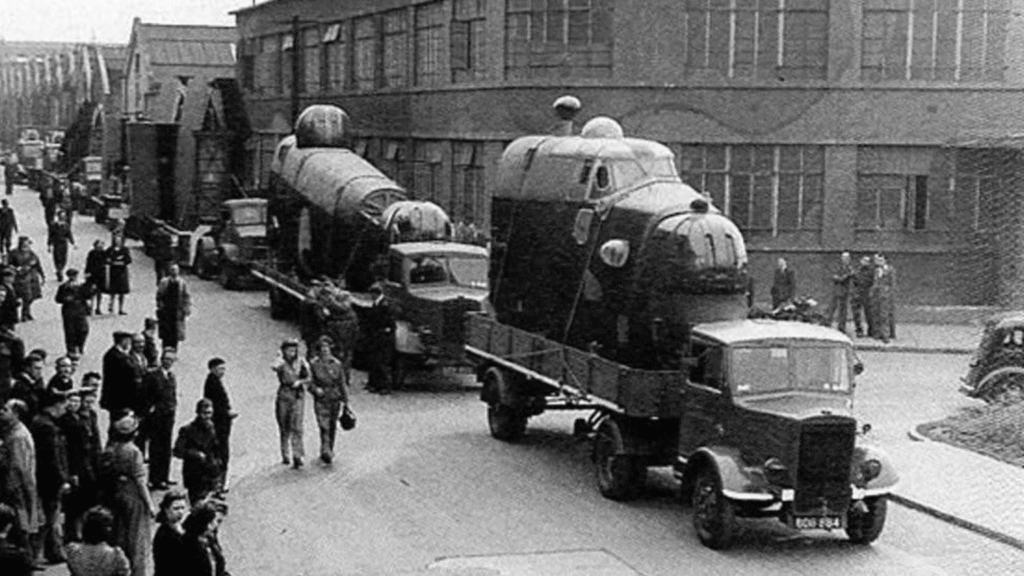
However, the site was not to remain idle for long. In 1934, the factory was acquired by Fairey Aviation of Hayes, which urgently needed greater capacity to fulfil defence orders. From November of that year, a large-scale refurbishment of the buildings began, and in September 1936, the first Fairey Hendon bomber rolled off the assembly line. Thirteen of these were built and transported by road to Barton Aerodrome for their initial trials.
The next phase began in 1937 when the plant switched to producing a new bomber, the Fairey Battle. Flight testing was soon moved to Ringway Aerodrome, which would later become the modern Manchester Airport.
With the outbreak of the Second World War, production expanded. In 1940, a shadow factory, Errwood Park, opened in Heaton Park, not far from the main site, also managed by Fairey. It produced Bristol Beaufighter fighters and Handley Page Halifax heavy bombers. After the war, at the end of 1945, the factory stopped assembling aircraft and was handed over to Crossley, where bus production was established.
Between 1936 and 1958, approximately 4,400 aircraft were built at the two factories in Heaton Chapel and Errwood Park. These facilities played a crucial role in the defence of Great Britain during both the First and Second World Wars, as well as in the development of its aviation industry.