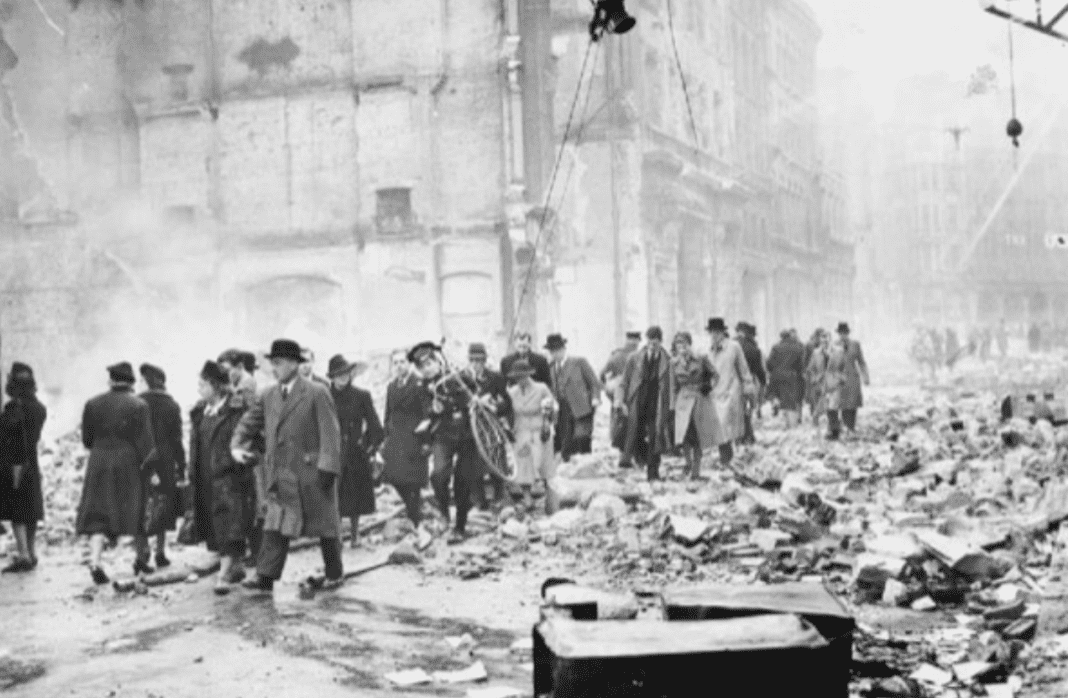

The period of the Second World War wasn’t easy for Manchester. In the 1940s, at the height of the war, German forces attacked Manchester from the sky. The bombardments of the city lasted almost throughout the war and caused enormous losses, taking thousands of human lives as well as destroying businesses and architecture. After the Second World War, Manchester had to be rebuilt from the ashes. Learn more at manchesteryes.com.
The devastation that reigned in Manchester during the war
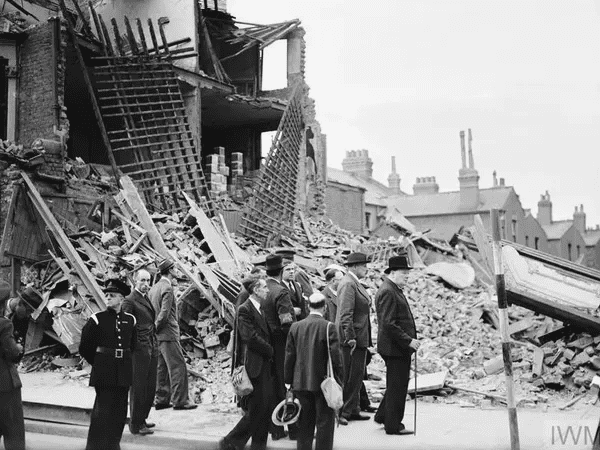
During the Second World War, Manchester suffered mainly from German bombing. Nazi air raids on the industrial city of Manchester began in the summer of 1940. Those were incredibly powerful attacks on such a small city as Manchester. As a result, only at the beginning of 1940, more than 600 people died in the city and more than 2000 people were injured. The city’s famous Palace Theatre on Oxford Street was destroyed too. Buildings located in the very centre of the city were also damaged. Some of them were Manchester Cathedral, the Royal Exchange, the Free Trade Hall, the Manchester Assize Courts, Old Trafford Football Stadium (Manchester United FC’s home stadium) and Trafford Park Industrial Complex.
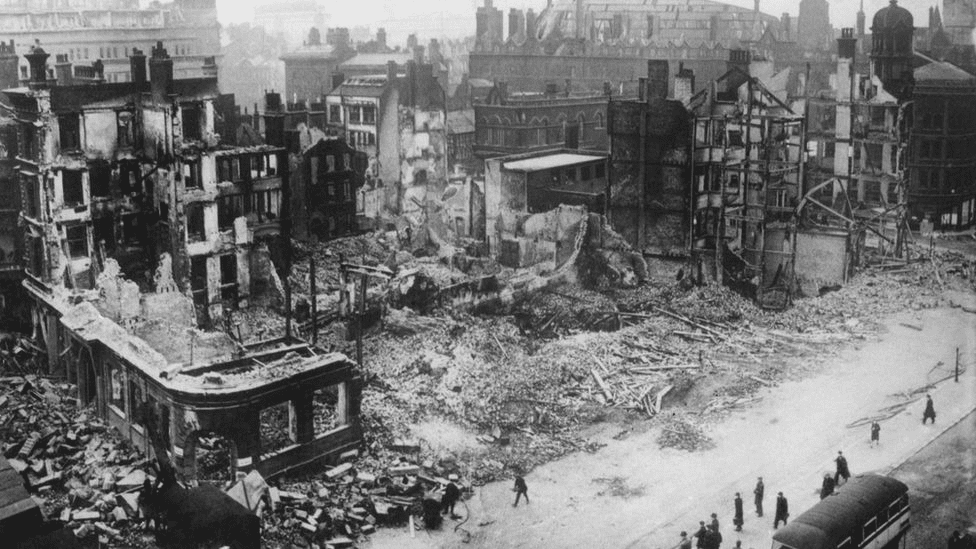
The Manchester Blitz, which took place between 1940 and 1942, was one of the most intense bombings the city had ever experienced. Manchester lay in ruins after the merciless German bombings. The city literally had to be rebuilt from the ashes.
The restoration of the city
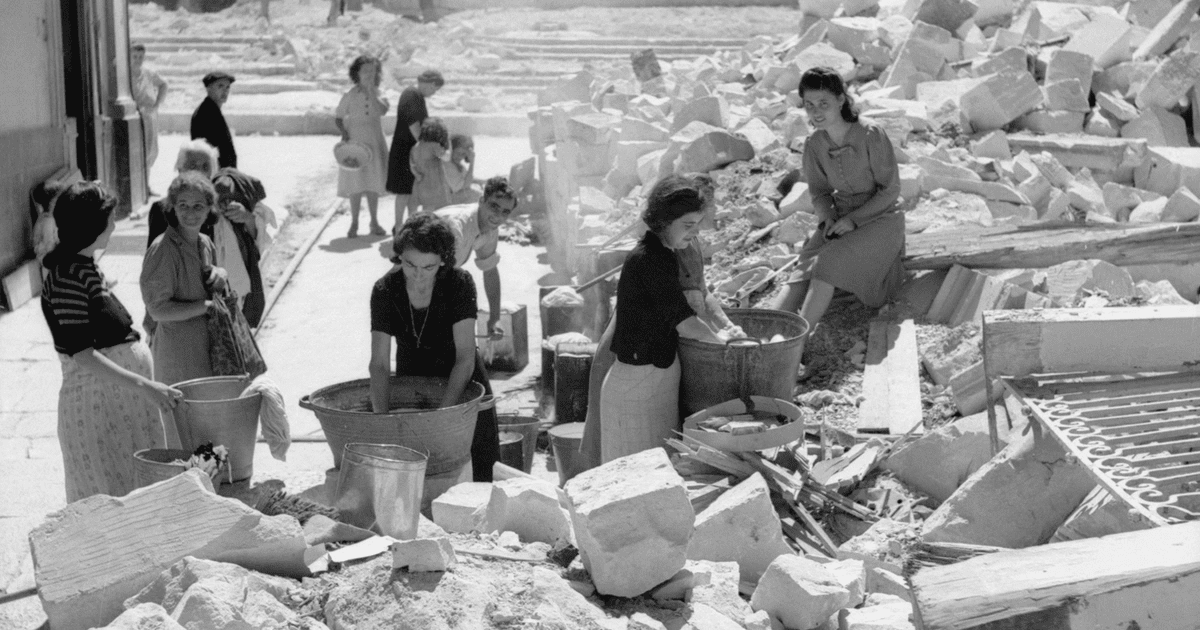
Whole blocks of Manchester were turned into ruins and iconic landmarks were forever erased from the city’s streets. The number of human victims was very high. Nevertheless, after the end of the Second World War, the people of Manchester began to rebuild it. Under the leadership of local authorities and community leaders, comprehensive reconstruction was launched to restore homes, businesses and infrastructure. Also, special projects were developed to restore the city infrastructure as soon as possible. As part of it, new residential buildings were built from scratch, factories were restored and public places such as parks, squares, stadiums and others were reconstructed. One such project was Manchester Arndale.
Thanks to extensive restoration programmes, life was returned to the city.
Post-war development
Football played a leading role in the post-war development of Manchester. At the beginning of 1950, Manchester United FC reached a new level and became a real legend. The team made the city famous far beyond the UK.
Manchester also played a key industrial role in the post-war period. In addition, in the 1950s, Manchester became a centre of research and development. Some of the most important research in the field of computer technology was conducted on the basis of the University of Manchester. Thanks to advances in this sphere, Manchester made an important contribution to the computer revolution.
In particular, the concept of the stored-program was introduced in Manchester. It led to the creation of the Manchester Baby, the first electronic stored-program computer and later the Manchester Mark 1.
In addition to the computer industry, Manchester played a key role in the post-war recovery in telecommunications. In the 1950s, the city became a testing ground for a new telephone service. It formed the basis of what was called mobile phone technology in the 21st century. A special telephone exchange was opened in Manchester, which allowed customers with devices installed in their cars to call any subscriber in the UK.
Manchester’s post-war recovery encompassed every aspect of city life. Colossal work was carried out not only in clearing rubble but also in the construction of new multi-storey apartment buildings. Post-war reconstruction significantly changed the architectural appearance of the city. Manchester has changed beyond recognition.
No sphere of city life was lagging behind in recovery. Sports and culture developed rapidly. The city implemented various social and public projects. In the 21st century, Manchester is a dynamic and prosperous metropolis, which is a testament to the resilience and determination of its residents in the face of adversity. The scars from the German bombing of 1940-1942 remained forever in the hearts of Manchester residents and on the very appearance of the city.
In particular, in the 21st century, there are many memorial complexes in the city that remind us of the bloody events of the Second World War. For example, the Civilians Wall in Chorlton Park, which was installed in memory of those who fell victims of the Nazis in 1939-1945.