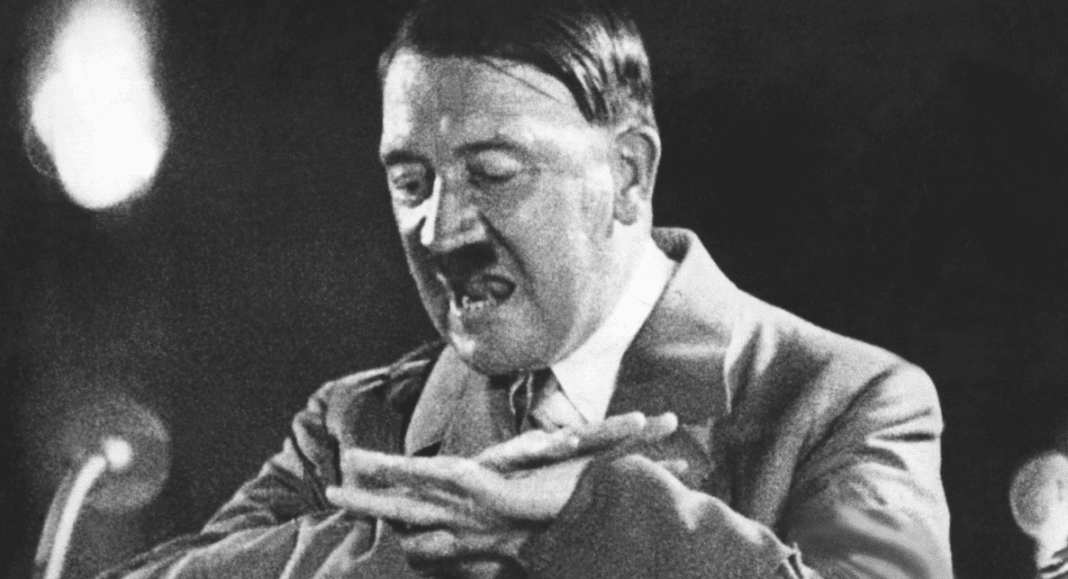

Hitler’s plans during World War II were rooted in his aggressive expansionist and ideological ambitions. Many of his objectives and intentions were detailed in his infamous book, Mein Kampf, and later executed through military and political strategies, igniting World War II in 1939. This article explores the significance of the British city of Manchester in Hitler’s plans. Next on manchesteryes.com.
The Outbreak of War

The central tenet of Hitler’s ideology was the conquest of other nations’ territories to settle the Aryan race. Firmly believing in the superiority of the Aryan race, Hitler sought to expand Germany’s borders into Eastern Europe.
Hitler’s military strategy involved the use of Blitzkrieg, or “lightning war,” a tactic designed to swiftly crush opposition. The aim was to secure rapid victories and demoralise adversaries.
In 1939, Hitler’s invasion of Poland marked the beginning of World War II. The Blitzkrieg tactic proved pivotal for German forces as they rapidly advanced, utilising ground and air units. This invasion prompted Britain and France to declare war on Germany.
Following the occupation of Poland, Hitler turned his attention to Western Europe, specifically France and Britain. In 1940, Hitler applied the same Blitzkrieg tactics, launching a bold attack through the Ardennes Forest, ultimately leading to France’s capitulation.
How Events Unfolded in Britain and Manchester

After France surrendered to Germany in 1940, the first air-raid sirens sounded in Manchester. Up until that point, Britain and Manchester had experienced a period of relative calm, with the conflict being referred to as the “Phoney War.” The initial German air raids near Manchester occurred in 1940, targeting Lancashire. The first bomb damaged a house in Salford at the corner of Trafford Road and Ordsall Lane. Following this, German forces dropped two more bombs in the Salford area, serving as a grim warning.
The attacks on Manchester intensified. German bombers targeted the city centre, causing extensive destruction. Iconic structures, including the Free Trade Hall, Cross Street Chapel, the Corn Exchange, and Smithfield Market, were reduced to rubble. The main cathedral was also heavily damaged. Over the course of a single day, more than 200 aircraft dropped 272 tonnes of explosive bombs and 1,032 incendiaries. Manchester was left in ruins, engulfed in flames.
Hitler’s Future Plans for Manchester

After occupying Poland and forcing France into submission, Hitler set his sights on Britain. A plan called Operation Sea Lion was devised by German forces to invade the British Isles. However, Hitler himself was reluctant to implement the plan, as securing a foothold on the island posed significant logistical challenges. Instead, the German command sought to pressure Britain into a peace agreement by leveraging its military superiority. This included relentless bombings of British cities, including Manchester.
Britain, however, refused to negotiate with the Nazis, prompting the Germans to initiate Operation Sea Lion in 1940. The invasion strategy focused on southern Britain, while plans for the northern regions, including Manchester, remained uncertain.
Nevertheless, Manchester held particular significance in Hitler’s plans. The city was intended to serve as a key administrative centre for German command, with its Town Hall requisitioned for this purpose. Hitler’s admiration for the Midland Hotel meant that it was earmarked to become a central hub for the Nazi elite, including Hitler himself.
The Impact of Bombing on Manchester

Although Manchester was not a primary target for occupation, it endured constant bombing throughout the war. This was largely due to the city’s industrial importance and its role as a storage site for British munitions. As Britain’s industrial heartland, Manchester housed numerous factories and workshops, many of which were repurposed to support the war effort.
Despite remaining free from German occupation, the relentless air raids had devastating consequences. Hundreds of innocent lives were lost, and the city was left in ruins. Fires consumed flammable buildings, and Manchester smouldered for weeks. It took decades to rebuild the city following the Nazi bombings.