

Abel Heywood is a fascinating and controversial figure in Manchester’s history. He was a successful businessman, yet his political views and statements were quite radical, resonating with some but alienating others in the city and even the nation. Nevertheless, through hard work, he achieved many successes, including serving as the Mayor of Manchester twice, from 1862 to 1863 and from 1876 to 1877. What were Heywood’s life and views like, and what did he accomplish during his two short mayoral terms? More on manchesteryes.com.
Who Was Abel Heywood?

Abel Heywood, the future Mayor of Manchester, was born in 1810 in Prestwich, near Manchester. His life was neither easy nor straightforward, often marked by hardships. Growing up in poverty, his circumstances worsened when his father died when Abel was just two years old. Seeking a better life, Abel and his mother moved to Manchester, a city undergoing rapid industrialization. The Industrial Revolution was at its peak, and opportunities abounded for Abel and his mother in Manchester.
Abel’s childhood was challenging, as he had to grow up quickly. He received a basic education at a school on Bennett Street and began working at the age of nine in one of Manchester’s industrial warehouses.
Abel always aspired to a better life, refusing to resign himself to a life of poverty. He understood that education was key to a brighter future. However, with limited resources, he dedicated himself to self-education. Eventually, he attended the local Mechanics’ Institute, which opened new doors for him.
Business in Abel Heywood’s Life
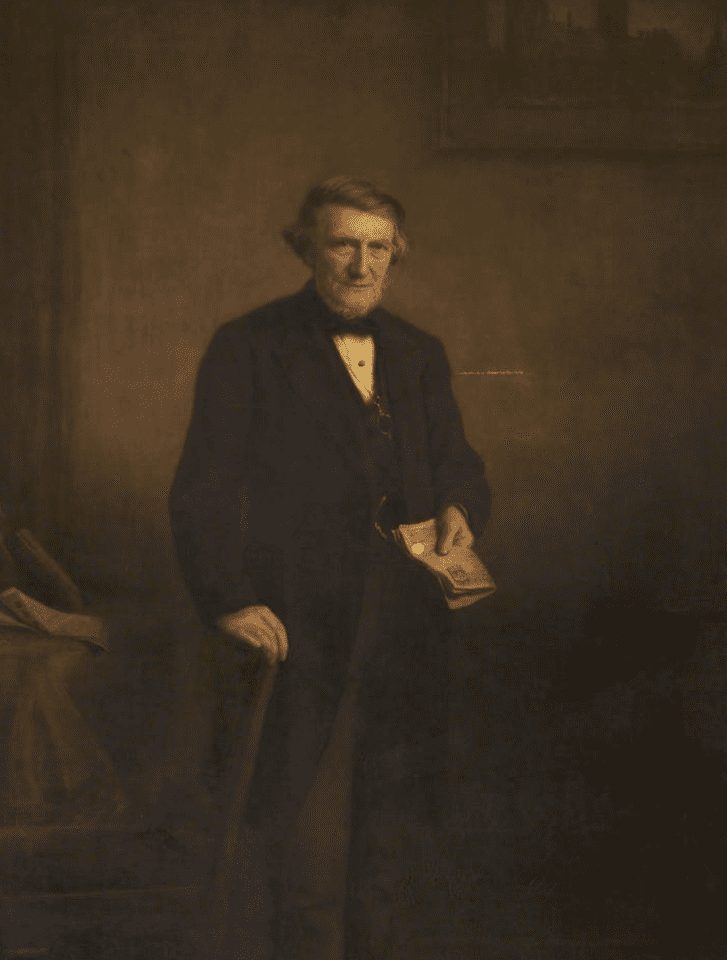
Abel was resourceful and entrepreneurial. In 1831, he opened a reading room in Manchester using his savings. His small business was quite successful, but there was a catch. Abel was a principled man who firmly adhered to his beliefs and refused to pay the stamp duty required to operate his reading room legally. In 1832, he was arrested and imprisoned for four months. He refused to pay the £48 fine even after his release. Despite continued fines sent to him, Abel never paid a single one. Nevertheless, his book-selling business thrived for several years, overcoming numerous obstacles.
Radicalism and Chartism in Abel Heywood’s Life

Abel lived during a period of social and political unrest fueled by movements striving to break the boundaries imposed by authorities and achieve justice.
As a radical, Abel emerged as a leader driven by a belief in the necessity of social transformation. His political career was less successful than his business ventures, characterized by a rocky path of ideological aspiration and pragmatic governance, reflecting the complexities of his era.
To understand the role radicalism and Chartism played in Abel Heywood’s life, one must first grasp their meaning. Chartism was a socio-political movement in 19th-century Britain. Its supporters demanded democratic reforms, government representation for the working class, and the protection of their rights. Entering politics, these objectives were paramount for Abel, as he had grown up in poverty and worked in Manchester’s factories from a young age. He knew firsthand the conditions faced by the working class and strove to improve them.
The ideology of radicalism in Heywood’s life manifested in his commitment to social justice. His policies and initiatives aimed to remove barriers faced by the city’s poor.
Mayor of Manchester

Heywood’s active public and political life eventually led to his appointment as alderman in 1853. By 1862, he was elected Mayor of Manchester. His first mayoral term, from 1862 to 1863, coincided with a period of economic hardship known as the “Cotton Famine,” a depression in the textile industry caused by overproduction and shrinking global markets. During this challenging time, Heywood’s short tenure left little room for significant achievements.
As mayor, Abel faced conflicts between his radical ideals and the practicalities of governance. His tenure showcased delicate management and efforts to enact change within deeply entrenched systems. While in office, Abel sought to translate his radical ideals into tangible reforms, evoking both admiration and apprehension. Chartism’s influence on his governance was evident in his defense of democratic principles.
In 1865, Abel unsuccessfully ran for alderman again. However, in 1876, he was re-elected as Mayor of Manchester, serving until 1877. During this term, he accomplished notable achievements, including overseeing the completion of Manchester Town Hall.
Little is known about Abel Heywood’s later life. He died in 1893 at the age of 83. Undoubtedly, Abel Heywood, his policies, and his fight for equality and the protection of the working class hold an important place in Manchester’s history.