

Manchester’s history is filled with people who shaped every sphere of the city’s life over decades. Many of them are well-known to every Manchester resident, while others remain obscure. You are likely to know little about Thomas Baker, a Unitarian minister and mayor of Manchester. He significantly influenced the social, cultural, and political spheres of the city. More details on manchesteryes.com.
What Is Known About Baker’s Early Years?
Baker was born in 1810 in Birmingham to a modest family. From an early age, Unitarianism played a significant role in his life. His deeply religious family instilled faith in young Baker, which later influenced his career and commitment to serving others.
He attended King Edward’s School in his hometown and later studied theology at Manchester College in York. Inspired by Unitarian teachings, a liberal Christian denomination emphasizing reason, tolerance, and social justice, Baker decided to dedicate his life to serving people and spreading the message of love, compassion, and equality.
Unitarian Minister

In 19th-century England, a Unitarian minister, or pastor, was a highly respected religious leader directly associated with the Unitarian movement. This liberal Christian denomination emphasized the unity of God and rejected the doctrine of the Trinity. Unitarian ministers like Baker played a significant role in advancing religious tolerance, social reform, and intellectual exploration during the 19th century.
It is worth noting that Unitarianism gained considerable popularity in Britain during the 18th and 19th centuries, attracting individuals dissatisfied with the doctrinal rigidity of mainstream Christianity. As a Unitarian minister, Baker highlighted the importance of reason, conscience, and individual interpretation of Scripture, rejecting orthodox beliefs such as original sin and predestination.
Baker served as a Unitarian minister in British towns such as Sidmouth and Devon, as well as in Manchester. He led congregations in Unitarian churches or chapels, where he preached sermons and conducted services with new parishioners. During his ministry in these towns, Baker played a key role in fostering intellectual and spiritual growth, encouraging critical thinking, and promoting open dialogue on matters of faith and morality.
Unitarian ministers in 19th-century Britain were also actively involved in social and political issues affecting society. They advocated for religious freedom, abolitionism, women’s rights, and other progressive reforms. Many openly condemned slavery, becoming ardent champions of social justice. This dedication to societal improvement paved Baker’s way into politics.
Baker in Politics

By the mid-19th century, Baker’s influence extended beyond the church. He actively participated in various charitable initiatives addressing pressing social issues of the time. These included women’s rights, workers’ rights, labor reforms, education, and healthcare initiatives. A staunch advocate of social justice and equality, Baker used the church as a platform to advance these ideas.
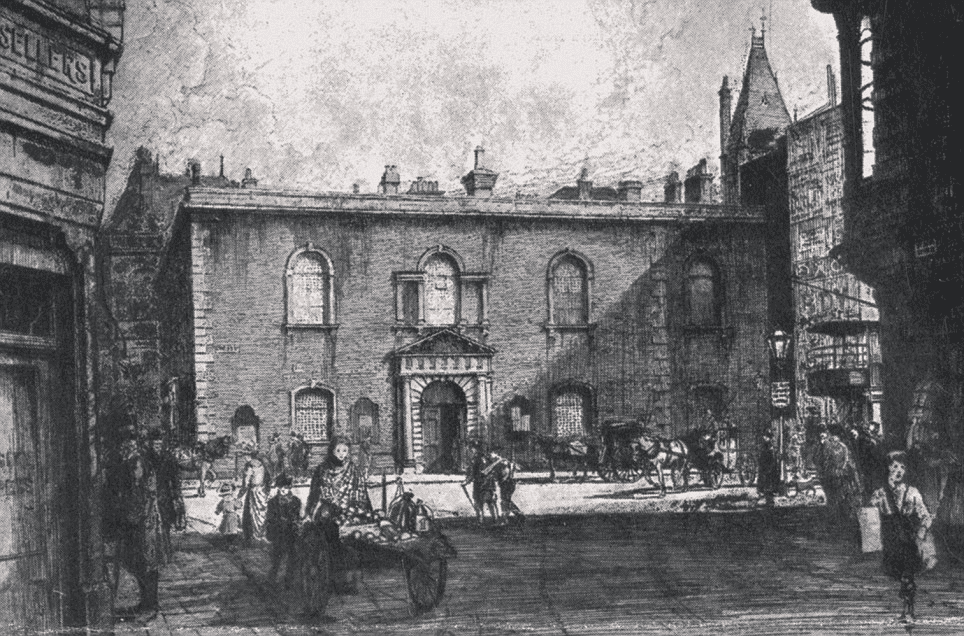
In Manchester, Baker became a long-standing presence, addressing numerous city problems. He regularly attended the Unitarian chapel on Cross Street and served as its trustee for over 20 years. Continuing his ministry in Manchester, Baker transitioned to the role of barrister in 1940.
Baker spent many years in Manchester, understanding every challenge the city faced and seeking solutions. Consequently, in 1880, he was elected Mayor of Manchester. Although he served as mayor for only two years, he achieved significant progress for the city. During his tenure, Baker spearheaded numerous initiatives to address the social and economic challenges of the 19th century. He advocated for the construction of affordable, quality housing and the expansion of state education. He forged connections with various companies and communities in Manchester, fostering mutual understanding. Throughout his life and mayoral term, Baker remained committed to social justice and equality, championing the most progressive reforms of his era.
For his service to the British people, Baker was knighted in 1883. He passed away in 1886 at the age of 76.
Though Baker is not as famous as other mayors and political figures of Manchester, he made a significant contribution to the city’s development and prosperity during the 19th century.