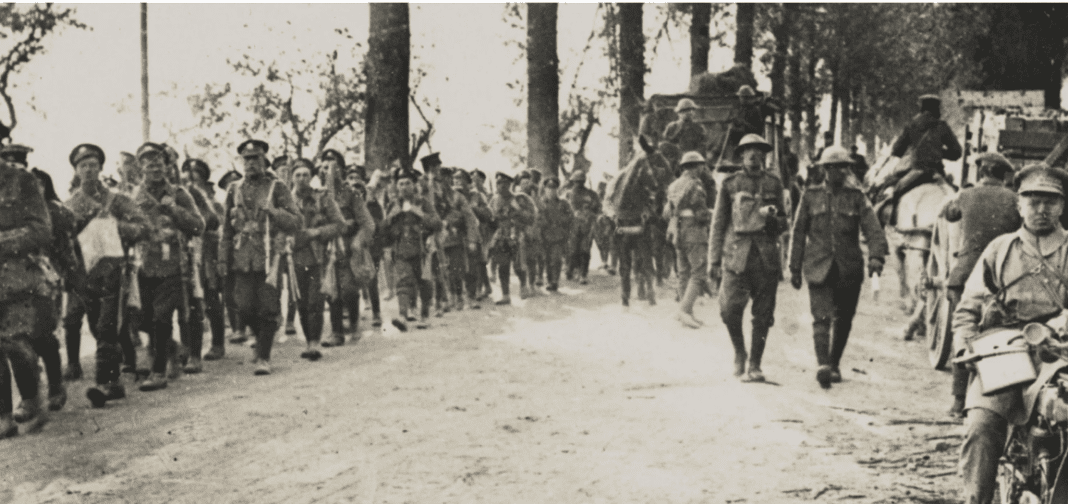

The Manchester Regiment boasts a rich and legendary history spanning over a century. Throughout its existence, the regiment underwent numerous changes and reorganisations. Despite these transformations, the regiment played a significant role in many armed conflicts. But how much do you know about one of the oldest military regiments in the city? Read on manchesteryes.com to learn more.
Formation of the Regiment

The history of the Manchester Regiment dates back to the mid-19th century, during the period of reforms that swept through Britain in the 1860s and 1880s. The British government decided to unite all single-battalion regiments and tie them to specific geographic areas. As a result of these military reforms, the Manchester Regiment was formed in 1881.
The Manchester Regiment was established by merging the 63rd and 96th Foot Regiments, both single-battalion units. These were associated with the 16th Sub-District Brigade, based in Ashton-under-Lyne, near Manchester. The 96th Foot Regiment, founded in Manchester in 1824, had been stationed there ever since. Upon its formation in 1881, the Manchester Regiment included the following units:
- 63rd Regimental District,
- 1st Battalion,
- 2nd Battalion,
- 3rd Battalion,
- 4th Battalion,
- 1st Volunteer Battalion,
- 2nd Volunteer Battalion,
- 3rd Volunteer Battalion,
- 4th Volunteer Battalion,
- 5th (Ardwick) Volunteer Battalion,
- 6th Volunteer Battalion.
Each unit was assigned specific missions and tasks, which they began to fulfil immediately after the regiment’s creation.
Military Conflicts Involving the Manchester Regiment

Shortly after its formation, the Manchester Regiment’s 1st Battalion was deployed to Egypt in 1882 to participate in the Anglo-Egyptian War. After operations there, the battalion was relocated to Gibraltar in 1897.
Meanwhile, the 2nd Battalion of the regiment had been stationed in India since 1882, engaging in military operations along the country’s north-western frontier until 1897.
The Manchester Regiment also played a significant role in the Second Anglo-Boer War, beginning in 1899. Battalions were stationed in Durban and Ladysmith, facing fierce resistance after Boer forces invaded the colony. Despite intense shelling, the regiment held its ground, actively countering Boer advances.
One of the most notable events occurred in 1900, during the 118-day Siege of Ladysmith. A detachment of 16 Manchester Regiment soldiers defended Wagon Hill against overwhelming Boer forces for 15 hours. Only two soldiers survived this intense battle, and both were awarded the Victoria Cross for their bravery.
Following these events, additional elements of the Manchester Regiment were deployed to South Africa. Nearly 930 officers and soldiers sailed from Southampton in 1900 to reinforce British forces in Natal. During the early 20th century, the regiment took part in key operations to liberate Ladysmith, Kimberley, and Mafeking.
By 1903, the regiment had left South Africa, with the 1st Battalion relocating to Singapore and later India. However, the 3rd and 4th Battalions were disbanded upon their return to the United Kingdom in 1906.
The Manchester Regiment in World War I and II

The Manchester Regiment played a crucial role in World War I and World War II, demonstrating resilience and bravery in the face of significant challenges and losses.
During World War I, the regiment was heavily involved on the Western Front, particularly during the Battle of the Somme in 1916. The 2nd Battalion was instrumental in the offensive. Meanwhile, the 1st and 6th Battalions participated in the Gallipoli Campaign, one of the war’s bloodiest battles.
In World War II, the regiment’s contributions were equally significant. One of its key missions was the evacuation of Dunkirk in 1940, where the 2nd Battalion formed part of the British Expeditionary Force resisting the German advance in France.
Additionally, some battalions participated in the Burma Campaign, fighting Japanese forces in Southeast Asia, which was a crucial aspect of the Allied operations.
What Happened to the Manchester Regiment?
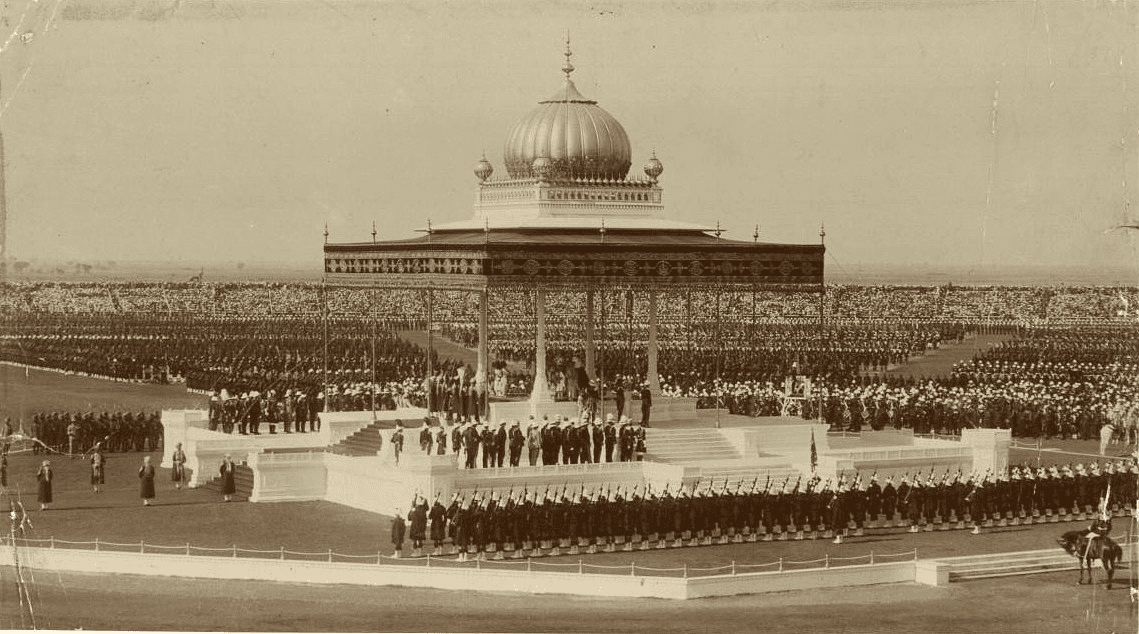
After World War II, some units of the Manchester Regiment remained stationed in Germany, leaving only in 1947. In 1950, the 1st Battalion returned as part of the West Berlin garrison, guarding Spandau Prison. By 1951, the regiment was deployed to Malaya, where it played an active role during the Malayan Emergency, eliminating insurgents.
The regiment returned to the UK in 1954, serving as part of the British Rhine Army until 1958. However, a series of military reforms and reorganisation led to its merger with other regiments, forming the King’s Regiment.
In 2006, the King’s Regiment underwent further restructuring, becoming part of the Duke of Lancaster’s Regiment. Although the Manchester Regiment has been reorganised multiple times, it remains a testament to Britain’s military strength, with a legacy of significant contributions to the city and the nation.
Today, the traditions and honours of the Manchester Regiment are upheld by the Duke of Lancaster’s Regiment, preserving the memory and achievements of one of Britain’s most storied military units.