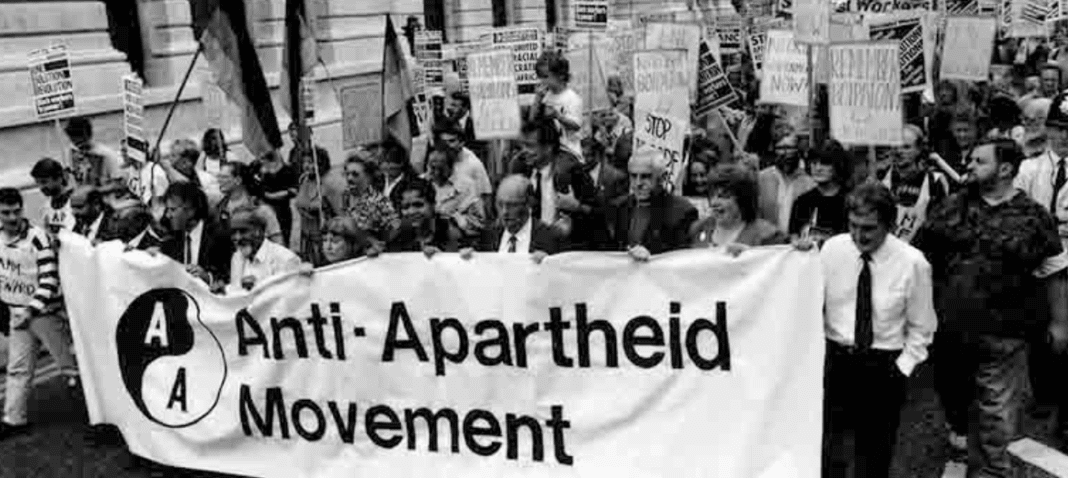

Manchester has played a significant role not only in the industrial development of the United Kingdom but also in its political history. Over the years, this massive industrial city became a hub for various organisations advocating for workers’ rights, women’s suffrage, and, notably, the fight against apartheid. The movement emerged as a collective protest against the oppressive apartheid regime in South Africa and resonated strongly with many students in Manchester. Next on manchesteryes.com.
What Was Apartheid?

Apartheid was a policy of racial discrimination, segregation, and oppression, officially implemented in 1948. It was enforced by the ruling elite of South Africa and targeted the local black population and even Asian immigrants. This policy lasted until the 1990s, sparking outrage and protests worldwide. Manchester was no exception, as students throughout the mid-20th century repeatedly organised demonstrations against apartheid.
The core aspect of apartheid was to segregate the development of South Africa’s European and non-European populations. As a result, the majority of South Africa’s population was rendered powerless. Over 23 million black South Africans were denied the civil rights enjoyed by white citizens, including the right to vote.
How Did Apartheid Impact Manchester?

News of South Africa’s brutal racial policies and the denial of fundamental rights spread across the globe. Outrage over apartheid led to the creation of anti-apartheid movements, including one in Manchester. This movement involved not only activists but also ordinary citizens who refused to ignore such injustices. The movement gained momentum throughout the 20th century, with various organisations, mass initiatives, and prominent figures consistently voicing their opposition to apartheid.
Among the most active advocates for justice in Manchester were students. They refused to turn a blind eye to apartheid and made significant efforts to change the situation. It started small, with students from Manchester universities fiercely criticising apartheid policies during union debates in the 1950s. They regularly mentioned the issue in their speeches and wrote articles to raise awareness about the global problem. In addition to criticism, Manchester students proposed radical changes and pursued them through institutional means rather than protests.
Throughout the 1950s, Manchester saw approximately 10 student-led protests against apartheid at local universities.
The Formation of the Anti-Apartheid Committee

A turning point in Manchester’s anti-apartheid efforts came in the 1960s with the establishment of a dedicated anti-apartheid committee. The committee included students, union leaders, community figures, activists, and concerned citizens from all walks of life.
Protests against apartheid continued in Manchester through the 1960s, 1970s, and 1980s, becoming an integral part of the political strategy of Manchester students. They regularly organised marches, sit-ins, and boycotts to draw public attention to apartheid policies. Students also maintained their criticism through debates and publications.
Manchester’s Role in the Anti-Apartheid Movement
The University of Manchester and other educational institutions in the city played a crucial role in the anti-apartheid movement. For decades, they served as centres of active student political engagement.
Student-led protests, rallies, strikes, and educational campaigns raised awareness about the atrocities occurring in South Africa under apartheid. Through lectures, debates, and cultural events, students and faculty sought to promote justice and equality.
Manchester’s students became a driving force that not only highlighted the issues of apartheid but also united people around this cause. From the 1950s to the 1980s, the anti-apartheid movement in Manchester attracted musicians, artists, performers, workers, politicians, and activists. Like the students, these individuals used their platforms to raise awareness and fund the anti-apartheid cause. Local labour unions also played a significant role, organising boycotts, strikes, and divestment campaigns. Recognising the connection between the fight against apartheid and the broader struggle for workers’ rights and social justice, unions called for equality and fairness.
The Protest for Nelson Mandela’s Release
One of the most iconic moments in Manchester’s anti-apartheid history occurred in the mid-1980s, when thousands took to the streets to protest against apartheid and demand Nelson Mandela’s release. The culmination of this movement was a demonstration in Platt Fields Park, which showcased the city’s solidarity with the people of South Africa.
Legacy of the Anti-Apartheid Movement in Manchester
Throughout the 20th century, the anti-apartheid movement was deeply intertwined with Manchester’s cultural, political, and social life. After the fall of the apartheid regime in South Africa and Nelson Mandela’s release, those who had participated in Manchester’s anti-apartheid efforts celebrated the long-awaited justice and equality they had tirelessly fought for.